
Lessons from crossing borders: why research security travels with researchers
When universities think about research security, they often focus on collaborations, funding arrangements and institutional partnerships. Yet many of the cases that attract headlines only come to light at a very different point in the research lifecycle: when people, materials, data or knowledge cross a border.
Over the past few years, a number of high-profile cases have involved researchers travelling internationally, moving biological materials between countries, or becoming subject to scrutiny while undertaking research overseas. These cases differ significantly in their facts and circumstances. Some involve allegations of misconduct, others concern disclosure obligations, and some highlight the risks researchers themselves may face when operating in unfamiliar legal and political environments. Yet they all point towards the same lesson: research security is not only about partnerships. It is also about movement.
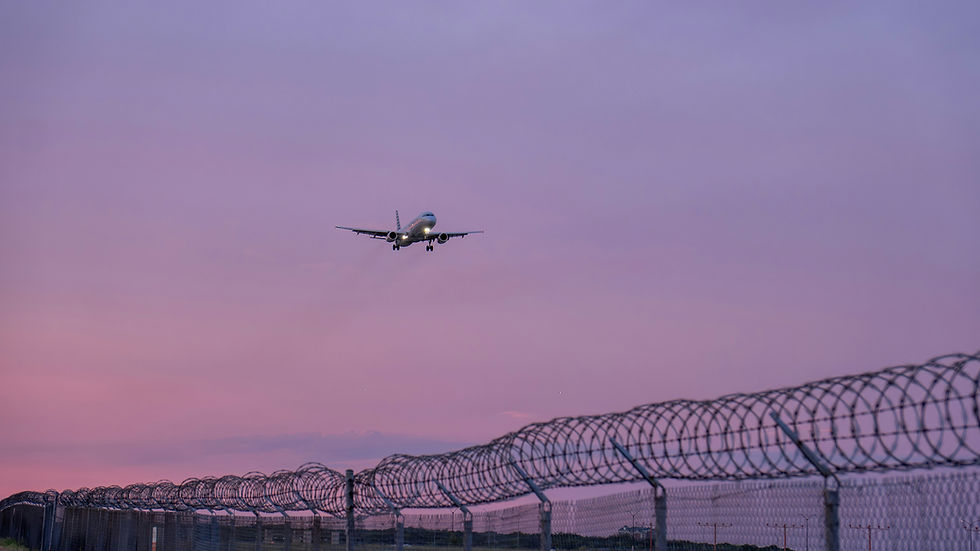
The border is rarely where the story begins
One of the common features of many research security incidents is that they become visible when somebody is travelling.
In 2019, former Beth Israel Deaconess Medical Center researcher Zaosong Zheng was stopped at Boston Logan Airport while preparing to fly to China. Authorities alleged that biological research materials were discovered in his luggage, leading to charges relating to smuggling and false statements. The case attracted significant attention because it highlighted questions around the movement of research materials between countries and the responsibilities researchers hold when handling scientific assets.
Travel-related risks do not always concern what researchers are carrying. In 2018, Australian academic Kylie Moore-Gilbert was detained in Iran after attending an academic conference. The circumstances of the case differed markedly from incidents involving the movement of research materials. However, it highlighted another dimension of international research: researchers themselves can encounter significant risks when operating within unfamiliar legal, political and security environments.
More recently, an Indiana University researcher pleaded guilty to smuggling E. coli DNA from China concealed in a clothing shipment, raising further questions about how scientific materials are moved internationally and the responsibilities that accompany those movements.
Questions arose about disclosure, oversight, compliance, research materials, affiliations and responsibilities long before customs officials became involved. Equally, the circumstances that shaped travel-related risks for researchers were often established long before an individual reached an airport or immigration checkpoint. The border simply became the point at which those issues became visible.
What is actually crossing the border?
Research security discussions are often framed around countries. Yet a more useful question may be: what is moving?
In modern research, the answer is rarely just the researcher. Researchers routinely cross borders carrying:
laptops and mobile devices;
access credentials;
unpublished research findings;
contact lists and collaboration networks;
scientific samples and materials;
specialist equipment;
institutional knowledge and expertise.
In many cases, the most valuable asset is not a physical object at all. It is the expertise in a researcher's head, the relationships they develop at conferences, or the knowledge exchanged during collaborative discussions.
When we ask what is moving, research security becomes less about geography and more about mobility.
Why countries and conferences matter
This is precisely why the National Protective Security Authority has released guidance on countries and conferences.
The guidance encourages researchers and institutions to think carefully about overseas travel, conference attendance and international engagement before problems arise. Rather than focusing solely on specific countries, it recognises that international travel can create a range of challenges involving information sharing, legal obligations, security expectations and institutional responsibilities.
Many researchers understandably view conferences primarily as opportunities to share findings, develop collaborations and grow professional networks. That is, after all, their purpose. However, conferences are also places where multiple forms of movement occur simultaneously.
Researchers travel internationally. Devices move between legal jurisdictions. New relationships are formed. Emerging research is discussed. Data, materials and equipment may accompany the traveller. Future partnerships may begin over coffee or dinner.
In short, conferences are places where research crosses borders in every sense of the phrase.
As governments take a more active role in shaping how knowledge, technology and talent move internationally, questions of researcher mobility are increasingly intersecting with foreign policy, economic security and science diplomacy. Universities are finding themselves operating in environments where decisions about international engagement can have implications beyond the research project itself.
Not every border story is a security story
Travel creates risk in more than one direction. Researchers may carry sensitive information, materials or technology across borders. Equally, researchers themselves can become exposed to risks arising from unfamiliar legal systems, political sensitivities or misunderstandings about the nature of their work. Effective travel guidance therefore protects both research and researchers. It is also important to recognise that not every border story is a security story.
A 2025 Boston Globe article,"Your Materials Have Been Incinerated: The Confounding Process of Travelling With Scientific Samples", explored the difficulties researchers face when moving legitimate scientific materials internationally. The article highlighted the complexity of customs rules, permits and import requirements, as well as the frustration experienced by researchers when valuable samples are delayed, seized or destroyed because procedures had not been followed correctly.
This is an important reminder that research security is not solely about identifying threats.
It is also about enabling research to happen safely, legally and responsibly.
International collaboration depends upon the movement of people, ideas, samples, data and equipment. The challenge is not to prevent that movement, but to ensure researchers understand the obligations that accompany it.
Why travel guidance matters
Travel guidance can sometimes feel like another administrative requirement in an already busy academic environment.
Yet many of the issues highlighted by research security practitioners emerge precisely because movement creates complexity.
This growing emphasis on travel is reflected in the NPSA's Trusted Research Evaluation Framework. Alongside governance, partnerships and due diligence, the Framework asks institutions to consider how they prepare and support researchers undertaking international travel and engagement.
Effective responses, however, must remain proportionate. Research security is most effective when institutions assess risk based on context, collaboration type and research content rather than relying on broad assumptions about countries or individuals.
The lesson
Much of the debate around research security focuses on countries, institutions and collaborations.
Yet many of the practical lessons emerge at moments of transition.
The conference trip.
The overseas visit.
The shipment of scientific samples.
The airport departure gate.
The customs inspection.
The conversation that sparks a future collaboration.
These are the points at which institutional policies meet the realities of international research. The question for universities is not whether researchers will cross borders. Modern research depends upon it. The question is whether they have equipped their researchers to understand the risks and responsibilities when they do.


Comments